

One lucky morning, you see your crypto’s going to the moon—then by the evening, it’s down 40%. What just happened?
Welcome to the wild world of volatility. It can wreck your plans, and your confidence in crypto. But here’s the thing: it’s not random. And once you understand it, you’ll be able to make smarter, safer decisions. So let’s break down what crypto volatility really is, why it matters, and how to survive it with your investments intact.
What Is Volatility?
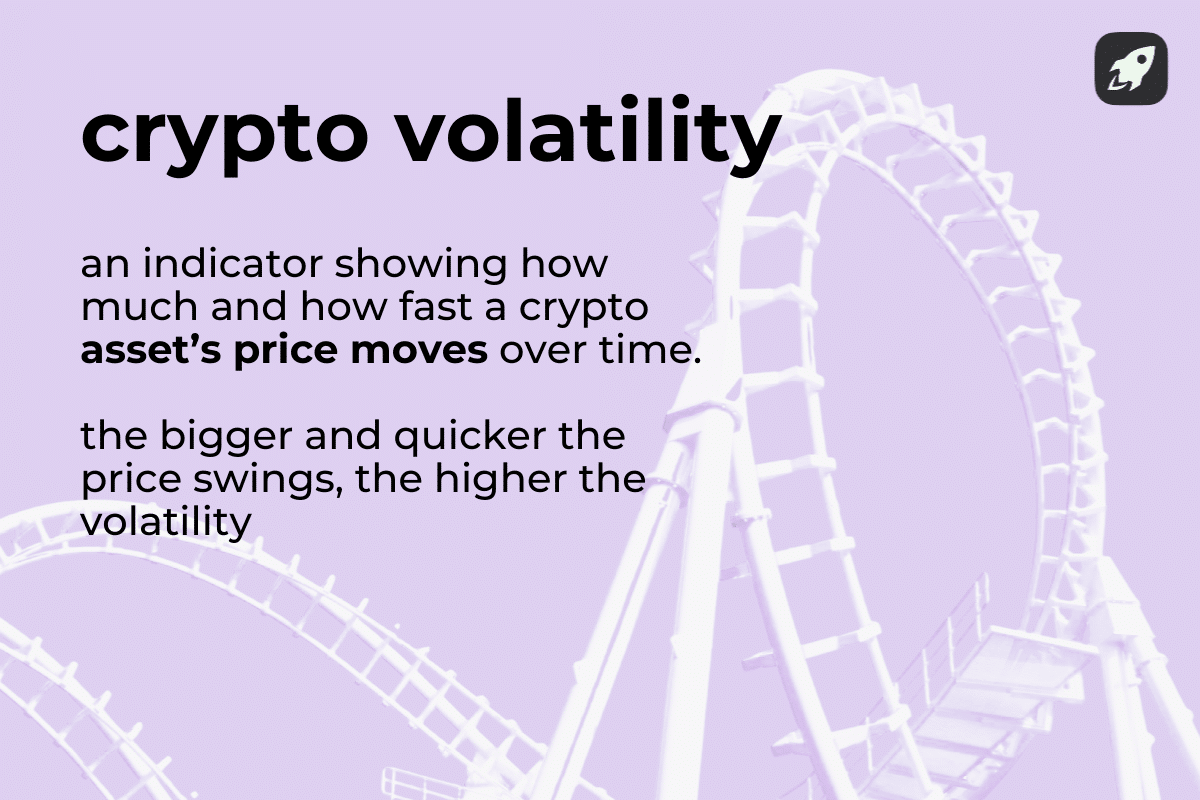
Volatility is how much an asset’s price fluctuates—up or down—over a specific period of time. Some assets show healthy volatility, with moderate, steady movements over longer timeframes. Others, like cryptocurrencies, can experience extreme volatility, with sharp, unpredictable swings in a short time.
Low-volatility assets, like government bonds, tend to move slowly and predictably. High-volatility ones, like tech stocks or emerging market currencies, can spike or crash in a day. Basically, the bigger and faster the moves, the more volatile the asset.
In financial markets, volatility is a key way to assess short-term risk. And cryptocurrencies are among the most volatile assets out there. Bitcoin and Ethereum, for example, can shift dramatically within hours. These price swings make crypto uniquely unpredictable—and potentially, uniquely rewarding.
For some, crypto’s volatility is an opportunity. Traders thrive on sharp price action to turn profits. Long-term investors treat it as a signal to stay calm, stick to their plan, and enter the market on their own terms. So whether you’re building a Bitcoin position or exploring altcoins, understanding crypto volatility can help you respond with strategy, not emotion.
Why Is Cryptocurrency So Volatile?
Crypto is young, thinly traded, and often based more on emotional reactions than fundamentals, which is why it’s often infamous for its extreme volatility. Bitcoin’s volatility, for example, is much higher than a traditional stock, bond or many other assets. Let’s figure out why, specifically.
Lack of Liquidity
Compared to stocks, crypto markets are often quite shallow. Low liquidity means there aren’t enough buyers and sellers, and a large transaction can move the price up or down much more sharply.
Bitcoin, the most traded asset in crypto, sees major swings when large transactions (usually made by crypto whales) hit the books. Back in 2021, the price of Bitcoin could rise or fall significantly in just 24 hours, erasing tens of billions of dollars in value at once, due to factors like large institutional sell-offs.
Market makers play an important role here, by stabilizing prices and reducing crypto’s day-to-day volatility. These services place both buy and sell orders to keep trading active, narrowing the spread and making it easier for regular traders to execute orders without major slippage. Their presence is one of several factors that shape how crypto markets behave, especially when emotions run high.
Hype and Panic Spread Fast
Even after all these years, crypto still moves on emotion. Much of its volatility comes from speculation, which is when traders bet on future adoption and real-world use cases rather than current fundamentals. It’s what drives the values of most cryptocurrencies.
A tweet, a rumor, or a news headline can trigger huge amounts of buying or selling, especially for altcoins. Anything from new regulations or central bank decisions (like changing interest rates) can ripple through the market and shift cryptocurrency prices.
People tend to chase pumps and panic sell during drops, as a general rule. Trading never stops in crypto, so momentum builds faster. Once the mood changes, the market reacts instantly. That’s why price swings can happen any time as well, day or night.
High Use of Leverage
Many crypto traders use leverage to increase their gains. But high leverage increases both profit potential and risk, and it makes volatility worse. That’s because when prices fall, leveraged positions get liquidated, forcing even more selling. That triggers a cascade effect. A small drop can quickly turn into a crash.
Uncertainty Around Laws and Regulations
Regulators don’t agree on how to treat crypto, and every time there’s news of a lawsuit, enforcement action, or proposed law, the confusion grows. And when that happens, the market reacts. Investors hate uncertainty. It drives fear, hesitation, and fast exits, which all raise volatility. But on the flip side, clear regulation and adoption by companies or governments can boost crypto prices and confidence higher.
Let’s take a look at the US as just one example. Different agencies, like the IRS, CFTC, and SEC define crypto as property, a commodity, or a security. The definition of a “virtual currency business” varies by state, making compliance a challenge for companies and market participants alike, especially when dealing with trademarks, service marks, and other legal classifications. The New York State Department of Financial Services, for example, requires virtual currency companies to either obtain a BitLicense or operate as a limited purpose trust company, and each option comes with its own regulatory obligations. This patchwork of rules adds uncertainty and complexity to the market, all of which ultimately fuels volatility.
How Is Volatility Measured?
Crypto volatility is usually measured by tracking how far and how often prices move from their average in a given period of time. The most common way to do that is with standard deviation, which shows how far prices deviate from their mean: the closer they stay, the lower the volatility, but the farther they swing, the higher it spikes.
Traders also look at historical volatility, which measures past price moves, and implied volatility, which shows what traders are expecting in the future. On top of that, tools like Bollinger Bands and the average true range (ATR) help visualize when crypto assets are getting shakier or calmer.
Keeping an eye on volatility is important for many reasons. Bitcoin’s volatility, for example, is one of the most closely watched indicators in the entire market, because it’s often used to gauge overall crypto sentiment.
Volatility is also closely tracked in traditional markets, and for good reason. Take the Dow Jones Industrial Average, a major stock index that follows 30 of the largest publicly traded companies in the US. A daily move of just 2% is already considered notable there. In crypto, by contrast, swings of 10% or more are common, showing just how much more extreme this market can be.
Crypto Volatility vs. Traditional Assets
Different markets react differently to news, hype and doubt. Below are the key factors that influence volatility in crypto compared to more traditional markets like stocks, bonds, or even gold:
| Volatility Factor | Cryptocurrency | Traditional Assets |
| Daily Price Swings | High, often 5–20% | Lower, usually 1–2% |
| Market Hours | 24/7 trading, no breaks | Business hours on weekdays |
| Liquidity | Lower, especially smaller coins | Higher, more buyers and sellers |
| Main Volatility Drivers | Speculation, social media hype/panic | Earnings reports, economic data, interest rates |
| Regulatory Clarity | Evolving and inconsistent | Well-defined and stable |
| Market Maturity | New, fast-moving asset class | Decades of historical performance |
| Market Stability | Higher investment risk and higher reward | Lower volatility and steadier returns |
Types & Measures of Volatility
Not all volatility is the same. The two most common types are historical and implied volatility, which we mentioned above. Each serves a different purpose. Let’s take a look at both in more detail.
Historical vs. Implied Volatility
Historical volatility looks backward. It measures how much the price has already moved over a specific time frame, like the past 30 or 90 days. The more the price has jumped around, the higher the historical volatility.
Implied volatility, on the other hand, looks forward. It’s based on what market participants expect the price to do next. You’ll mostly find this in derivatives markets like options, where higher implied volatility means traders anticipate big moves, up or down.
Basically, historical data helps you understand what happened. Implied data tells you what traders think will happen next. Together, they give you a fuller view before you decide to invest in a crypto asset.
Simple Numeric Example
Say Bitcoin closed at these prices over 5 consecutive days:
- $29,000
- $31,500
- $27,000
- $32,000
- $30,500
The average over those five days is $30,000. But the price jumped more than $5,000 from low to high. That large spread shows high historical volatility, which means the asset has moved far from its average in the past.
Now imagine traders expect similar wild swings next week due to an upcoming regulation vote or earnings announcement from a major crypto company. As a result, the implied volatility in Bitcoin options also rises. This signals the market expects more big moves, though no one knows yet in which direction.
Used together, historical and implied volatility tell you the whole story. Use them to spot danger—or opportunity—before you make a move.
Why Crypto Volatility Affects You
Because it impacts your money and your assets, and it should also impact how you make decisions with them. You’re not just watching the market. You’re part of it. Knowing how crypto volatility works helps you stay calm, make smarter moves, and protect your long-term profit.
When crypto prices swing hard, so do your investment results. You might wake up to a 20% gain… or a 30% loss. That kind of movement may be “normal” in crypto, but that word hits differently when it’s your money on the line. If you’re trading, volatility could mean sudden potential losses. If you’re holding long-term, it still affects how your coins are valued, how they’re treated by tax laws, or even how they show up on your balance sheet.
It also affects your behavior. Investors tend to buy when prices rise and panic-sell during dips. Volatility feeds that emotional loop, and that’s how many end up locking in losses. That’s why education matters for everyone. When retail investors understand how the market works—from volatility drivers to emotional pitfalls—they’re less likely to panic sell or chase pumps. Smarter trading decisions lead to a more stable market overall.
Strategies to Navigate Volatility in Crypto
You might not be able to control volatility. But you can control what you do with it. Whether you’re a long-term investor or an active trader, your best defense is having a plan. Below are four essential strategies to manage the chaos and protect your coins when prices swing hard.
Only Risk What You Can Afford to Lose
It’s a golden rule for a reason. Crypto is a highly volatile asset class, and even coins with strong fundamentals can drop 50% in a single day. So never invest your rent or emergency savings. If a trade goes south, you shouldn’t have to sell your position… or your couch.
Think of your crypto investment as part of your broader financial picture. Even if you have a higher risk tolerance, it doesn’t mean you should ignore red flags. It means you can stomach a loss without throwing your entire life off balance.
Don’t Chase the Hype
Every bull run brings a wave of “next big thing” tokens. But by the time a project hits the trending page, the early traders have often already locked in their profit. Hype is loud. FOMO is even louder. But chasing price pumps rarely ends well. Most sellers dump when momentum slows, and you’re left holding the bag.
Instead, focus on projects with strong fundamentals. Check the team, tech, roadmap, and market use cases. Good investments don’t need hype, they need time.
Use Tools Like Stop-Loss Orders
When the market moves fast, emotion is your enemy. This is where automation comes in. A stop-loss order automatically sells your crypto if the price drops to a level you set. It limits your downside without you having to watch the charts 24/7.
Let’s say you buy Bitcoin at $30,000 and set a stop-loss at $27,000. If Bitcoin’s price dips that far, your position closes to prevent deeper losses. That way, you stay in control even if Bitcoin’s volatility suddenly shoots up. Many exchanges also offer variations like trailing stops or limit orders. Use them to protect your capital and sleep better at night.
And if the big players use risk management services, so should you. Look at Fidelity Digital Asset Services, which helps institutional investors manage volatility through secure custody, trade execution, and market analysis. You don’t need to be an institution to take volatility seriously. The right tools and simple habits can help any investor protect their portfolio.
Dollar-Cost Averaging
Trying to time the market perfectly is a myth. Even pros get it wrong. That’s why dollar-cost averaging (DCA) is so popular with smart investors.
DCA means buying a fixed dollar amount of crypto at regular intervals—like $100 every week—no matter the price. Sometimes you buy high, sometimes low, but over time you smooth out the effects of volatility this way.
This strategy helps take emotion out of the equation. No panic selling, no reckless FOMO buying. Just consistent, disciplined accumulation. Even institutional investors use DCA to manage riskier investments. It’s slow, but steady, and it works.
Final Thoughts
Crypto volatility can be wild, but it doesn’t have to wreck your strategy. If you understand what drives it and how to manage it, you’ll stay calm when prices swing. Use smart tools like stop-loss orders and DCA, avoid emotional moves, and invest only what you can afford to lose. In this market, preparation beats prediction every time.
FAQ
How to know if a crypto is volatile?
Check the asset’s historical price range and daily swings. If a coin frequently moves more than 10% in a single day, that’s a strong sign of high volatility. You can also look at its trading volume, market cap, and how often it hits all-time highs or crashes. Lower liquidity often means higher risk.
What time is crypto most volatile?
Crypto tends to be most volatile during overlap hours between the US and European markets. That’s roughly 8 a.m. to noon EST. Price swings also spike during major news events or unexpected regulation updates. Weekends also see more volatility, as liquidity thins and increases risk. But since crypto trades 24/7, prices can swing at any time.
How do I know if a coin is too volatile for me?
Ask yourself how much value you’re willing to see drop overnight while still sleeping okay. If big price drops make you anxious or lead to impulsive decisions, that coin might be too volatile for your current risk tolerance. Stick to more established assets with higher market caps and lower volatility until you’re more confident. Always match your strategy to your comfort level.
Disclaimer: Please note that the contents of this article are not financial or investing advice. The information provided in this article is the author’s opinion only and should not be considered as offering trading or investing recommendations. We do not make any warranties about the completeness, reliability and accuracy of this information. The cryptocurrency market suffers from high volatility and occasional arbitrary movements. Any investor, trader, or regular crypto users should research multiple viewpoints and be familiar with all local regulations before committing to an investment.


