

When you hear the word “oracle,” you might picture a fantasy prophet or a crystal ball. But in crypto, the idea is less mystical, and far more practical. This article explains what an oracle is in crypto, why crypto oracles matter, how they work, and how they connect blockchain technology to external data you actually care about.
What Is an Oracle in Crypto?
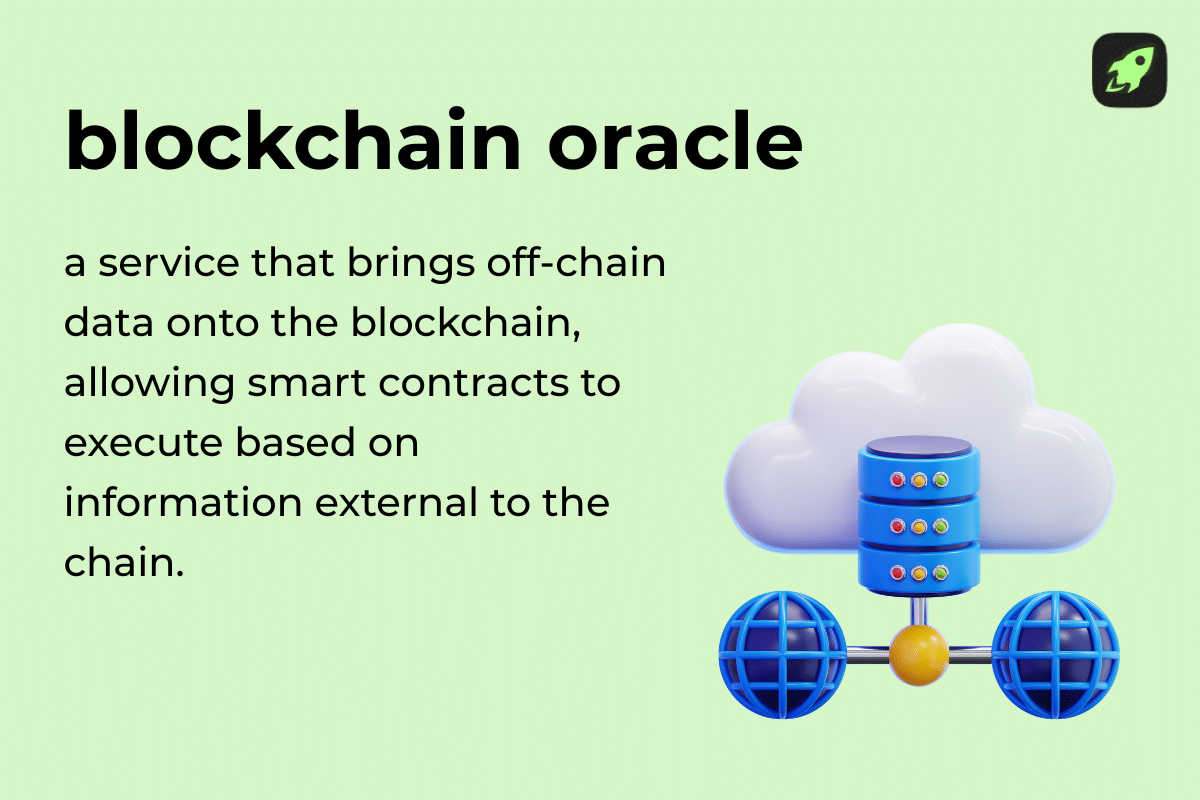
An oracle in crypto is a service that delivers off-chain data to on-chain smart contracts. In simple terms, it acts as the bridge between two environments that cannot talk to each other by default: the blockchain, and the outside world. Without a blockchain oracle, smart contracts cannot access prices, events, or information that exists beyond its native chain.
A blockchain oracle sources all necessary information from external data sources, verifying it and submitting it to the blockchain in a format smart contracts can use. The data provided by an oracle might include asset prices, exchange rates, real-world events, or sensor readings. Once the data arrives on-chain, the smart contract can execute based on it, without any inputs from humans.
Why Blockchain Oracles Matter
By design, a blockchain network can only see what happens on-chain. It can’t observe prices, payments, weather conditions, or outcomes in the real world. That gap makes smart contracts incomplete on their own. Oracles are what bridge this gap, which is what makes them so important.
Most useful smart contract applications depend on external data. Decentralized finance needs price oracles to access financial data like asset prices and exchange rates. Insurance contracts need confirmation of real-world events, such as flight delays or weather disruptions. Supply chain systems rely on updates from off-chain logistics and sensors. Without oracles, none of these contracts could execute safely or automatically.
How Blockchain Oracles Work (Step-by-Step)
Oracles follow a simple workflow: an on-chain contract asks a question, and an off-chain system returns a verified answer. Let’s analyze each part of that process in detail.
Step 1: Smart Contract Requests Data
A smart contract starts by making a data request. It usually does this through an oracle contract—a small on-chain component that defines what data it needs and how it should arrive. For example, a lending protocol might request the current market price of an asset, or an insurance contract might request confirmation that a real-world event happened.
Step 2: Oracle Node Fetches Data from External APIs
Next, an oracle node picks up the smart contract’s request and goes off-chain to collect the necessary data. The node might query external systems—most often through web APIs—or pull information from other off-chain resources like exchanges, data vendors, or enterprise databases.
At this step, where data is sourced from is incredibly important. If the node pulls from weak or compromised sources, you get weak results. That’s why many oracle service providers don’t rely on a single feed. They use multiple external data sources so the oracle mechanism can compare results and reduce the risk of manipulation.
Step 3: Verification, Data Signing & Attestation
After the node fetches off-chain data, it needs to prove the data’s integrity. This step typically includes verification, plus data signing and attestation. The node signs the result so anyone can check who delivered it and whether anyone altered it in transit.
Networks of decentralized oracles often go even further. They make several nodes fetch the same data, then compare answers. This design reduces the risk of a single point of failure, and helps protect on-chain smart contracts from bad inputs. Some systems also rely on cryptoeconomic security, where nodes risk penalties if they submit bad data.
Step 4: Submitting Data On-Chain to the Contract
Once the oracle node prepares its response, it submits the result on-chain. The blockchain records it as part of normal blockchain transactions, which makes the data tamper-proof after confirmation. At this stage, the oracle contract passes the verified value to the smart contract that requested it. If the oracle network uses aggregation, it may submit a final value like a median, not just raw inputs.
Step 5: Contract Execution and Result Delivery
Now, the smart contract can execute based on the incoming data. This is where the outcome becomes real: a liquidation triggers, a payout happens, a position rebalances, or a game logic update runs. The contract finally has the missing context from the off-chain world.
Some workflows also push results outward. An outbound setup can send blockchain data to external systems—for example, triggering an off-chain payment or updating a backend database. In both cases, the oracle connects the environments and turns static on-chain code into something that can react to real-world inputs.

How to Get Free Crypto
Simple tricks to build a profitable portfolio at zero cost

Key Technologies Behind Oracles
Oracle systems rely on several core technologies to deliver accurate data, maintain security, and automate smart contract behavior.
- Cryptoeconomic Security (Staking, Slashing, Incentives)
Many decentralized oracles rely on economic incentives to stay honest. Oracle nodes stake tokens and earn rewards for correct behavior. Then, if they submit false or manipulated data, the system can slash their stake. This model discourages data manipulation and aligns oracle behavior with the security of on-chain smart contracts. - Aggregation & Medianization
Instead of trusting a single data point, oracle networks collect inputs from multiple data sources. They then aggregate the results and often apply medianization to filter out outliers. This approach reduces the impact of faulty feeds, sudden price spikes, or a single compromised node. - Data Signing & Attestation
Before oracle data reaches the blockchain, nodes cryptographically sign it. This proves who provided the data and confirms that no one altered it in transit. Attestation creates an auditable trail, which is critical when smart contract execution depends entirely on external inputs. - Verifiable Random Function (VRF) Oracles
Some applications need randomness, not prices or events. VRF oracles generate verifiable randomness off-chain and prove on-chain that the result was fair and unpredictable. This is essential for play-to-earn gaming, NFT drops, and any system where biased randomness would break trust. - Automation & Keeper Services
Automation tools monitor conditions off-chain and trigger on-chain actions when predefined rules are met. Instead of waiting for a user transaction, keeper services can execute smart contracts automatically—such as rebalancing positions or settling contracts at the right time. - Push vs. Pull
Pull-based oracles fetch data only when a smart contract makes a data request. Push-based oracles continuously publish updates on-chain, like price feeds. Each model fits different use cases, depending on how often data changes and how time-sensitive execution needs to be.
Different Types of Blockchain Oracles
Different types of oracles solve different problems, depending on where data comes from, how it flows, and how much trust you want to assume.
Centralized Oracles and Decentralized Oracle Networks (DONs)
Centralized oracles rely on a single entity to fetch off-chain data and deliver it on-chain. They’re simple and fast, but if that provider goes offline, gets hacked, or manipulates data, every dependent smart contract breaks.
A decentralized oracle network (DON) spreads this responsibility across many independent oracle nodes. This model reduces assumptions of trust, limits potential manipulation, and improves uptime for critical smart contract applications.
Inbound and Outbound Oracles
Inbound oracles bring information from outside into the blockchain. Price feeds, weather data, and event confirmations all fall into this category. Most DeFi and insurance use cases depend on inbound data.
Outbound oracles send on-chain data to external systems. For example, an outbound oracle can trigger a payment system, update a backend database, or notify an enterprise system after a smart contract executes.
Software and Hardware Oracles (IoT Data)
Software oracles pull data from online sources like APIs, exchanges, or databases. They handle most financial data, market prices, and public information used by smart contracts.
Hardware oracles rely on IoT sensors and technologies like radio frequency identification to report real-world conditions. Supply chain tracking, environmental monitoring, and logistics systems often use hardware oracles.
Push and Pull Oracles (How Data Flows)
Pull-based oracles respond to specific data requests from smart contracts. The contract asks a question, and the oracle fetches the answer. This model works well for one-time checks or conditional execution.
Push-based oracles continuously publish updates on-chain. Price feeds are the most common example. Contracts subscribe to these updates and react automatically when values change, without sending individual requests.
Hybrid and Optimistic Oracles (UMA Example)
Hybrid oracles use off-chain infrastructure for complex processing and computation, only submitting the final results on-chain, reducing costs and complexity.
Optimistic oracles, like the UMA Optimistic Oracle, assume data is correct by default. They only verify it if someone challenges the result during a dispute window. This design lowers costs while still allowing dispute resolution, since incentives exist to catch errors.
Cross-Chain and Bridge Oracles (Interoperability)
Cross-chain oracles move data and messages between different chains. They allow applications on one blockchain to read information from another, enabling interoperability beyond a single network.
Bridge oracles support bridging assets cross-chain by verifying events on one blockchain and triggering actions on another. However, these systems demand stronger security models because failures can affect multiple ecosystems at once.
Popular Oracle Projects and Use Cases
Let’s look beyond the theory, and learn about the real infrastructure powering live smart contracts across blockchain networks and dApps. Below are key projects and how builders use oracle data today:
Chainlink: A Leading Decentralized Oracle Network (DON)
Chainlink is the most widely used DON in crypto. It supports price feeds, randomness, automation, and cross-chain messaging between dozens of chains. Major institutions like Mastercard and UBS have already tested Chainlink services for on-chain financial workflows.
Learn more: What is Chainlink (LINK)?
Band Protocol: Cross-Chain Data Aggregation
Band Protocol offers a DON platform built on the Cosmos SDK that pulls external sources of data into smart contracts with high throughput and interoperability. It aggregates APIs and feeds across blockchains including Ethereum, Solana, and BNB Chain—making it a strong choice for cross-chain price data and custom feeds.
Pyth Network: Low-Latency Market Data for DeFi
Pyth Network focuses on low-latency financial data, sourcing prices from first-party providers like exchanges and trading firms and publishing them to destination chains. It secures real-time feeds for decentralized exchanges and trading protocols across many ecosystems, with integrations on many chains and billions in TVS (Total Value Secured).
UMA Optimistic Oracle: Dispute-Based Validation
UMA’s Optimistic Oracle uses an “assume-true” model where data is accepted unless someone disputes it within a challenge window. This dispute-based validation makes price and event data cheaper to request while still offering economic incentives for honest reporting. It’s useful for synthetic assets and customizable oracle responses.
Read also: Optimistic Rollups
DeFi Applications: Price Feeds and Collateral Verification
Decentralized finance (DeFi) depends on oracles for reliable price feeds and collateral verification. Lending platforms use price oracles to determine interest rates and liquidation thresholds. Automated market makers and synthetic asset platforms pull external pricing to balance positions and calculate swaps. Without dependable price data, these systems cannot function securely or efficiently.
Insurance, Gaming & NFTs: Real-World Events On-Chain
Beyond finance, oracles enable contracts to react to real events. Insurance applications verify occurrences like flight delays or weather conditions before triggering payouts. Gaming platforms use verifiable randomness and event results for fair outcomes. Some NFT projects change artwork or metadata based on live sports scores or environmental data delivered by oracles.
Limitations of Crypto Oracles
Oracles unlock powerful use cases, but they also introduce real constraints.
- Oracle problem
Smart contracts fully trust oracle data. If the data is wrong, the contract still executes, but on false inputs. - Centralization risk
Centralized oracles rely on one entity, creating a single point of failure. If the system goes offline, gets compromised, or reports bad data, dependent contracts can misfire. - Off-chain data risk
Off-chain data may come from flawed, delayed, or manipulated sources. You can never be 100% sure. - Latency
Oracles introduce delays between real-world events and on-chain updates. In volatile markets, outdated price feeds can trigger unfair liquidations or missed executions. - Cost
Secure oracle designs require multiple nodes, aggregation, and verification, increasing fees for users and applications.
Common Misconceptions About Blockchain Oracles
Misunderstandings around oracles are common, especially for newcomers. Clearing them up helps you reason more clearly about risk, trust, and design choices.
- “Oracles are part of the blockchain”: Not exactly
Oracles do not live inside the blockchain itself. They operate mostly off-chain and act as external services that deliver data to on-chain smart contracts. The blockchain verifies the result, not the process that produced the data. - “Oracles always tell the truth”: They rely on sources
An oracle can only be as reliable as its data sources and incentives. If an oracle pulls from weak or compromised off-chain sources, the output can still be wrong. DONs reduce this risk, but they don’t eliminate it. - “All oracles work the same way”: Different models exist
Oracle designs vary widely. Some use pull-based requests, others push continuous updates. Some rely on aggregation and staking, while optimistic oracles depend on dispute resolution. Each model fits different trust and cost requirements. - “Chainlink is the only oracle”: There are alternatives
Chainlink is widely used, but it is not the only option. Projects like Band Protocol, Pyth Network, and UMA’s Optimistic Oracle serve different ecosystems and data needs. Oracle choice depends on latency, cost, and security assumptions.
The Future of Blockchain Oracles
Blockchain oracles are shifting from simple data feeds to full infrastructure layers. The next phase will focus on compute-enabled oracles that can process complex logic off-chain and return only verified results on-chain. This may reduce costs and make advanced smart contract applications practical.
Interoperability is another priority. Cross-chain oracles already help connect blockchains, and future designs will focus on safely moving data and assets across multiple networks without relying on a single system. At the same time, oracle security models will keep evolving, with stronger cryptoeconomic incentives and better tooling to reduce data manipulation.
In any case, oracles will remain the bridge between on-chain code and the off-chain world—by doing the work that makes automation possible.
Final Thoughts
Blockchains run on code, but the real world runs on data. Oracles connect these two worlds. They let smart contracts react to prices, events, and conditions that exist beyond the blockchain itself. That power comes with trade-offs—trust, security, and availability all matter. Understanding how oracles work helps you better judge the risks and limits of decentralized applications.
FAQ
Why does a blockchain need oracles?
A blockchain needs oracles because it cannot access off-chain data on its own. Oracles deliver real-world information so smart contracts can execute based on external conditions.
Can a blockchain work without oracles?
Yes, but only for simple on-chain logic. Without oracles, smart contracts cannot use prices, events, or data from outside the blockchain.
Why can’t blockchains get data on their own?
Blockchains are intentionally isolated to stay secure and remain tamper-proof. Allowing direct external access would break assumptions of consensus and trust.
How is an oracle different from a normal website API?
A website API just returns data. An oracle verifies, signs, and delivers that data on-chain in a way smart contracts can trust and act on.
How often do oracles update data like prices?
It depends on the design. Some push updates continuously, while others update only when a contract makes a request or certain thresholds are met.
Disclaimer: Please note that the contents of this article are not financial or investing advice. The information provided in this article is the author’s opinion only and should not be considered as offering trading or investing recommendations. We do not make any warranties about the completeness, reliability and accuracy of this information. The cryptocurrency market suffers from high volatility and occasional arbitrary movements. Any investor, trader, or regular crypto users should research multiple viewpoints and be familiar with all local regulations before committing to an investment.


