

You can trust your crypto wallet with your digital assets, but remember that one mistake can wipe everything out. A hacked device, stolen private key, or bad click can open your vault up to hackers or malicious actors.
This risk defines most cryptocurrency wallets today. They have a clear single point of failure. In this article, we will break down what a multi-signature wallet is, and why it can solve this problem. Keep reading to find out how multisig wallets work, why a multisig wallet adds enhanced security, and when multiple signatures actually matter.
What Is Multi-Signature (Multisig)?
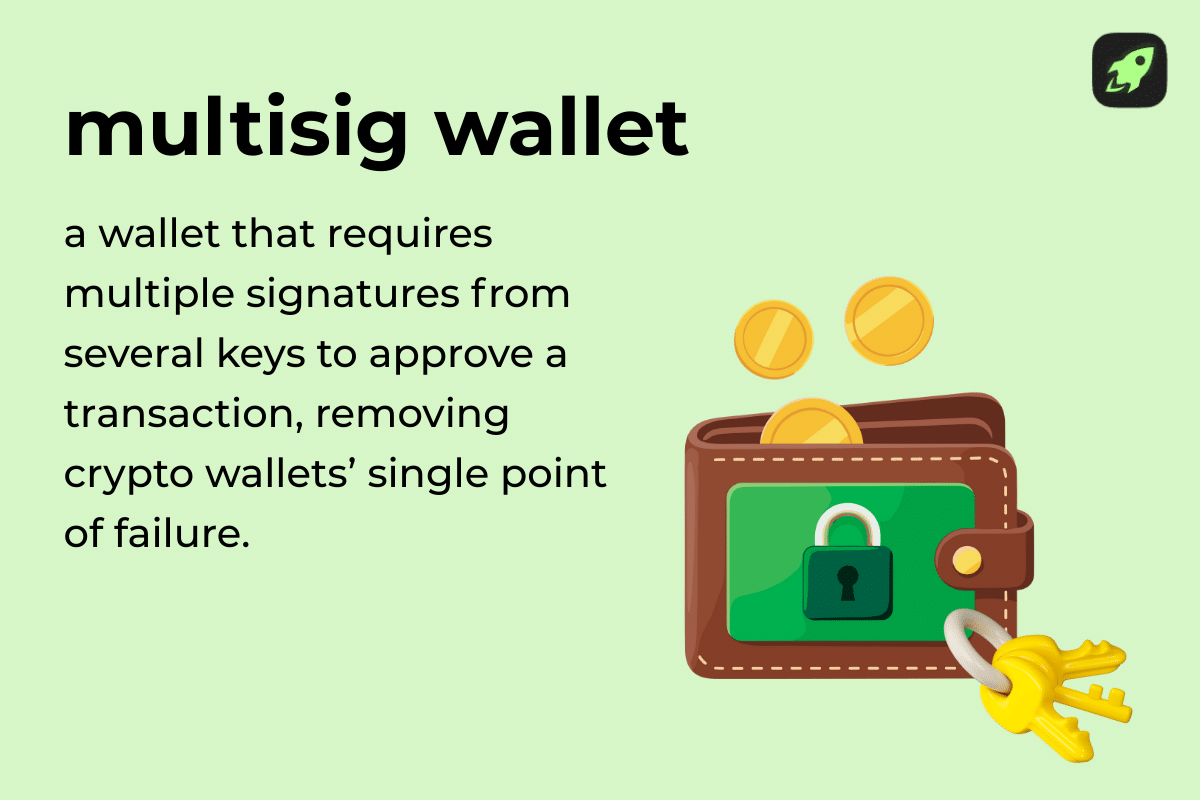
A multisig wallet is a type of crypto wallet that uses multiple private keys instead of one. To move funds, the wallet requires multiple signatures—which is where the name comes from. Instead of needing just one person’s approval, it needs more than one signature to do anything.
In a standard cryptocurrency wallet setup, one private key is in control. But if you happen to lose it, that means you lose access. And if it gets leaked, someone can authorize transactions without you. This design creates a single point of failure. But a multi-signature wallet removes that risk. Because it requires multiple keys to control, and each key belongs to a different person or device, no single key can act by itself.
Multisig setups follow an M-of-N threshold. What this means is that a fixed number of signatures is required to approve a transaction. For example, “2-of-3” or “3-of-5”. Because of this structure, multisig wallets can better protect digital assets from theft, human mistakes, and internal abuse. They force agreement and block vulnerable shortcuts.
How Multisig Works: Step‑by‑Step
A multisig wallet follows strict rules enforced on-chain. You define them upfront and the network follows them every time. Here’s how multisig wallets work in practice:
- The keys are created.
Each participant generates their own private key and public key. Every participant’s keys stay independent. - The multisig wallet is defined.
All public keys are combined into one setup. This creates a multisig address with an M-of-N threshold for signatures (for example, 2-of-3). - The funds are received.
You send funds to the multisig address. The blockchain locks them behind rules you defined yourself. - A transaction is proposed.
One signer creates a transaction proposal. The funds remain untouched at this stage. - Signatures are collected.
The necessary number of participants must sign the transaction using the majority of all the private keys for it to go through. This often happens across multiple participants and/or devices. - The threshold is met.
Once the required number of signatures is reached, the transaction becomes valid. - The transaction is broadcast.
The wallet performs a transaction broadcast. The network verifies each digital signature. The block receives confirmation. That’s it!
On Bitcoin, the logic of multisig wallets relies on BIP-174, which defines Partially Signed Bitcoin Transactions (PSBT).
Types of Multi-Signature Wallets
Every multisig wallet follows the same ruleset. You define how many keys exist and how many must approve a transaction for it to go through. This structure is called an M-of-N threshold. Different setups solve different problems. Here are the most common ones:
- 1-of-2 signatures.
This setup uses two keys, but only one signature is needed. It’s best for redundancy, not shared control. People use it to split one key across multiple locations—for example, to keep one key on a laptop and the other in a hardware wallet. The security is limited, because if one key is stolen, funds can still be moved. This setup doesn’t eliminate the single point of failure—everything still depends on a single signature—but it does protect you against device loss. - 2-of-3 signatures.
Here, three keys exist, and two signatures are required to sign the transaction. This is the most common multisig wallet design. It protects against theft and loss while staying usable. If you lose one key, the wallet still works okay. This model fits self-custody, families, and small group fund management setups. - 3-of-5 signatures.
There are five keys, and three signatures need to approve spending. This setup is best for larger groups. Decentralized autonomous organizations (DAOs) and businesses use it to enforce consensus and reduce internal risk. It strengthens control over shared crypto assets, but has one tradeoff: slower approval times.

How to Get Free Crypto
Simple tricks to build a profitable portfolio at zero cost

Why Use a Multisig Wallet?
In most crypto wallets, a private key controls everything, and if it’s lost, you lose access. A multisig wallet solves this by design. With control split across multiple private keys, the wallet requires multiple signatures to approve spending, and isn’t as easy to lose.
This structure blocks unilateral action. Even if one key is stolen or compromised, the funds stay safe. An attacker must control several keys at once, often across multiple devices and locations, which raises the cost and difficulty of an attack dramatically.
Multi-signature wallets also enforce accountability. Businesses use multi-signature wallets for treasury management so no single employee can move company funds. Decentralized autonomous organizations (DAOs) depend on multisig to manage shared treasuries and voting outcomes transparently.
This model has become standard across DeFi governance. For example, Safe (formerly Gnosis Safe) secures DAO and protocol treasuries across Ethereum and Layer 2 networks worth tens of billions of dollars.
When Do I Need to Use a Multisig Wallet?
Here are the most common situations where a multisig wallet makes sense:
- You manage shared funds.
As we’ve discussed, businesses use multi-signature wallets for treasury management so no single person can move company assets alone. So do DAOs, relying on multisig setups to enforce collective approvals on Ethereum or Layer 2 networks. If you’re managing funds for an organization like this, multisig wallets are the safest and best bet. - You hold high-value crypto assets.
Large holders use multisig to protect their crypto assets from theft or loss. Their keys are split across multiple locations and devices, often pairing software wallets with hardware ones. This setup limits damage from phishing, malware, or device failure, which remain the leading causes of crypto losses. - You need escrow or neutral control.
Multisig wallets support on-chain escrow. Multiple parties must approve the release of funds, which reduces the chances of disputes or abuse. This model is common in peer-to-peer (P2P) trades and DAO-controlled grants. - You plan for long-term storage or recovery.
Multisig helps with inheritance and contingency planning. If a key is lost, the remaining keys can still allow transactions, depending on the setup. This avoids permanent loss.
Is a Multisig Wallet Safer Than a Regular Crypto Wallet?
Yes, a multisig wallet is really much safer than most traditional wallets. The reason is simple—a regular cryptocurrency wallet relies on a single private key. If that key is lost or stolen, attackers can move your funds instantly. But a multisig wallet removes that risk. It splits control across multiple keys and requires multiple signatures to approve spending.
Most crypto losses come from phishing attacks, leaked backups, or malware that targets private keys. Multisig setups make these attacks highly costly for the hackers and less dangerous for you. Still, there are tradeoffs. Multisig wallets add complexity. Signing takes coordination. And if you lose too many keys, you may lose access permanently. Human error becomes a real risk if backups are sloppy.
Still, for protecting digital assets at scale, the security gains outweigh the friction. For serious value, that difference matters.
Pros and Cons of Multisig
Multisig wallet security is stronger, but comes with some disadvantages. Its value depends on how much risk you manage and how many people are involved. Here’s a clear breakdown.
| Pros of Multisig Wallets | Cons of Multisig Wallets |
| Removes the single point of failure of one private key in most crypto wallets. | More setup and key management is required for every transaction. |
| Blocks unauthorized transactions from a single compromised key. | Slower transaction processing time. |
| Enforces shared control and accountability. | Requires coordination between signers. |
| Allows recovery if a single key is lost (in some setups, like 2-of-3). | You can lose access if too many keys are lost. |
| Proven by DAOs and businesses managing treasuries. | Less suitable for individual, casual use. |
Is a Multisig Wallet Suitable for Beginners?
It depends on your goals and risk tolerance. For most beginners, a multisig wallet adds complexity they don’t need yet. You must manage multiple keys, backups, and signing flows. Mistakes can lead to delays or even loss if setup is careless.
That said, beginners with meaningful balances may still benefit. A multisig wallet reduces reliance on a single private key and limits damage from theft or device failure. Many multisig options start with guided instructions, use a hardware wallet and clear signing prompts. These tools reduce friction while keeping control non-custodial.
Most Popular Multisig Wallets
There are several reliable multisig wallets you can choose from. Each fits different needs, from personal security to group control.
- Electrum: A Bitcoin wallet with native multisig support. You combine multiple keys to create a shared address and coordinate signatures. Many pair it with hardware setups for extra safety.
- Safe (formerly Gnosis Safe): A multisig based on smart contracts for Ethereum and EVM networks. It works with ERC-20 tokens and NFTs, letting multiple people approve spending.
- Casa: A guided multisig service aimed at individuals. It helps you set up and manage your keys across devices with a clear user interface.
- BitGo: An institutional solution used by businesses and custodians. It’s multisig with enterprise-grade controls.
- Specter Desktop: A Bitcoin multisig tool that works with hardware storage options. It’s designed for advanced DIY setups and personal cold storage.
Multisig vs. Other Crypto Wallet Types
Here’s how multisig compares to the most common cryptocurrency wallet types, such as smart contract wallets and others.
| Wallet Type | How It Works | Main Risk | Best Use Case |
| Single-signature wallet | Uses one private key to sign transactions. | Single point of failure. | Daily use, small balances. |
| Multisig wallet | Uses several keys and signatures. | Coordination and setup errors. | Shared funds, high-value storage. |
| Smart contract wallet | Uses on-chain code to control access. | Contract bugs or misconfiguration. | DeFi users seeking advanced controls. |
| Custodial wallet | Third party holds your keys. | Loss of self-custody. | Convenience, trading. |
| Hardware wallet | Stores keys offline on its own device. | Physical loss if not backed up. | Long-term personal storage. |
Final Thoughts: Should You Use Multisig?
If your wallet holds a lot of value, it’s best not to rely on one private key. The risk grows quickly as balances increase or ownership becomes shared. A multisig wallet adds structure. It enforces agreement. It protects your crypto assets from avoidable failures and bad decisions.
You don’t need multisig for everything. But when funds matter, a multisig wallet is advanced security to keep your mind at ease. And that’s priceless.
FAQ
What happens if one signer loses their key in a multisig wallet?
If the setup allows it, the remaining keys can still authorize transactions. In common designs like 2-of-3, one lost key does not lock the wallet. Still, you should move funds to a new multisig address as soon as possible, just in case.
Can I use a multisig wallet without being technical?
Yes, you can. Some multisig wallets guide you through setup and signing with clear prompts. You still manage several keys, but the tools reduce complexity.
Do multisig wallets cost more in transaction fees?
Yes, slightly. Multisig transactions include more data because they carry several signatures, which can increase fees depending on the network.
Can I combine a hardware wallet with a multisig setup?
Yes. Many people use a hardware wallet as one or more signers in a multisig wallet. This keeps private keys offline while maintaining shared control.
Disclaimer: Please note that the contents of this article are not financial or investing advice. The information provided in this article is the author’s opinion only and should not be considered as offering trading or investing recommendations. We do not make any warranties about the completeness, reliability and accuracy of this information. The cryptocurrency market suffers from high volatility and occasional arbitrary movements. Any investor, trader, or regular crypto users should research multiple viewpoints and be familiar with all local regulations before committing to an investment.


