

NFTs divide opinion. Where some investors see an opportunity for something great, others see pure speculation. If you feel unsure yourself, you’re not alone. Non-fungible tokens (NFTs) sit at the crossroads of digital assets, art, and blockchain technology, which are notoriously hype-based and risky investment spaces. NFTs can represent digital ownership, unlock new markets, and support creators. But prices can fluctuate dramatically, liquidity is still thin, and regulation remains unclear.
This guide breaks down NFT pros and cons so you can decide—clearly and independently—whether investing in NFTs fits your goals and risk tolerance.
What Are NFTs and How Do They Work?
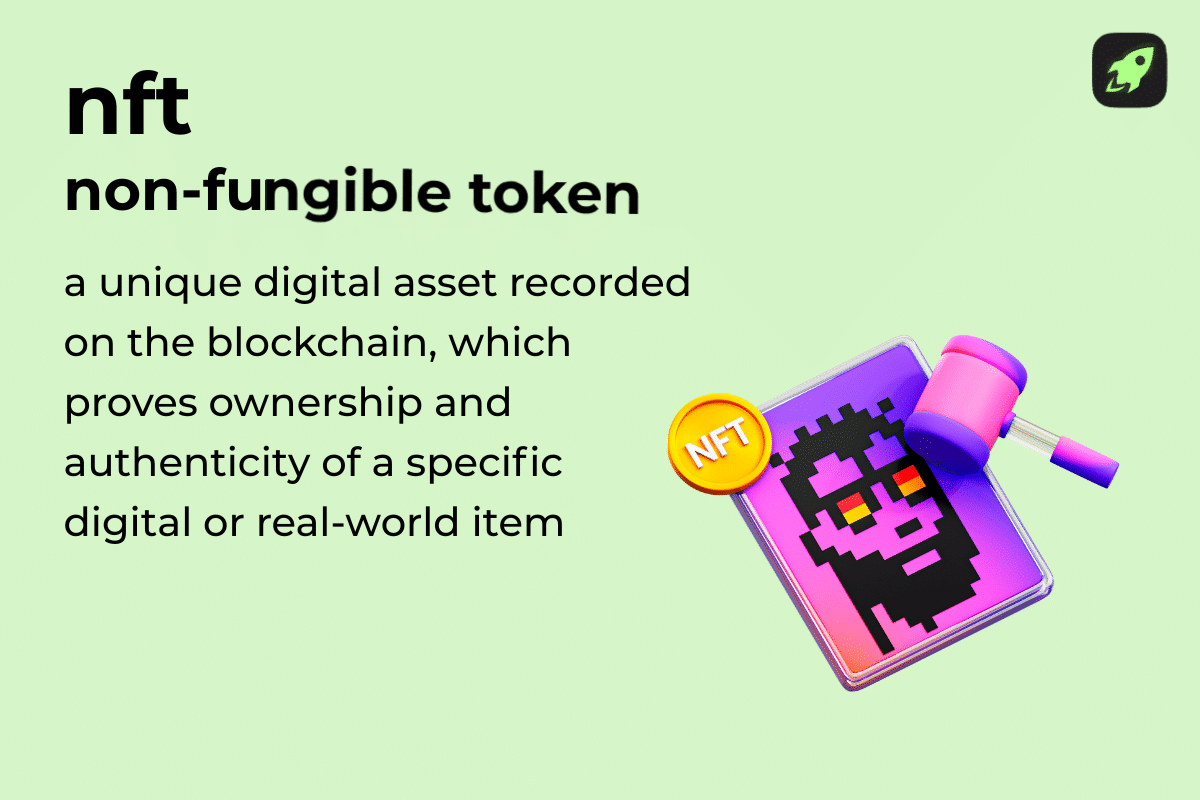
Non-fungible tokens (NFTs) are unique digital assets recorded on a blockchain. Unlike cryptocurrencies, each NFT exists on a one-to-one basis, which means no two tokens are the same. That uniqueness allows NFTs to represent ownership of digital art, music, virtual land, or other digital assets.
Here’s the important part: NFTs represent ownership, not the file itself. That record of ownership lives on the blockchain, where anyone can verify it.
NFTs work by relying on standards like ERC-721 and ERC-1155. These define how NFTs get created, transferred, and tracked using smart contracts. The creation process, called minting, records the NFT on the blockchain. After that, you can store it in a digital wallet, transfer it, or trade NFTs on online marketplaces using NFT transactions.
The Advantages of Investing in NFTs
NFTs offer benefits that traditional digital assets cannot provide. Below are the main advantages you should know if you’re considering them as an investment:
Digital Ownership and Provenance
NFTs provide verifiable ownership of unique digital assets. Each NFT includes a transparent record of ownership history stored on blockchain ledgers—this is also known as provenance. You can trace who created the NFT, who owned it previously, and when transfers occurred.
That matters in the digital realm, where copying files is easy. NFTs solve that problem by proving which token is authentic—even when the underlying digital artwork appears identical elsewhere.
As a result, NFTs stand apart from traditional digital assets, which lack built-in ownership records.
Royalties and Passive Income Potential
NFTs provide creators with new monetization tools. Many NFTs include creator royalties, which automatically pay artists a percentage of secondary sales.
Just remember that royalties only apply when the NFT resells. They do not guarantee income. Market activity determines whether royalties generate value.
For creators, this model offers long-term participation in the NFT ecosystem. For buyers, royalties slightly increase transaction costs and affect resale pricing.
Early-Stage Market Opportunities
The NFT market is still relatively young. That creates early-stage opportunities, but also more risks. Some NFTs gain attention quickly due to market trends, cultural relevance, or utility.
That means NFT prices can fluctuate dramatically. Market volatility defines the space. Prices often move based on sentiment rather than fundamentals.
That’s why early participation rewards research, not speed. You must evaluate each NFT asset on its own merits.
Community, Utility, and Brand Engagement
Many NFTs provide more than ownership. Some unlock access to online communities, events, or exclusive content. Others connect to gaming, virtual real estate, or membership systems.
Projects like NBA Top Shot show how NFTs integrate with entertainment and fan engagement.
In practice, value often comes from utility, not artwork alone. But utility depends on execution, adoption, and long-term support.
Transparency and Security Through the Blockchain
NFT transactions rely on blockchain transactions that anyone can verify. Ownership records remain public, immutable, and timestamped.
Security depends on how you store your NFT. For example, a non-custodial wallet gives you full control, but also all the responsibility. If attackers steal your private keys, you lose access permanently.
Blockchain systems are secure by design. Their real safety is determined by how you use them.
Technological Innovation and Web3 Integration
NFTs connect directly to Web3 infrastructure. They integrate with decentralized apps, marketplaces, and smart contracts without intermediaries.
Standards like ERC-721 allow NFTs to move across platforms inside the broader digital economy. That interoperability enables use cases across gaming, finance, and media.

How to Get Free Crypto
Simple tricks to build a profitable portfolio at zero cost

The Disadvantages and Risks of NFT Investing
NFTs offer new opportunities, but they also carry significant risks. If you’re considering investing in NFTs, you need to understand where losses might come from—and why many buyers struggle to exit positions profitably.
Let’s break down the main risks of NFTs in detail:
Market Volatility
The NFT market experiences extreme price fluctuations. NFT prices can rise quickly during hype cycles and fall just as fast when interest fades.
Unlike traditional assets, NFTs lack consistent valuation models. As a result, prices often respond to social media trends, influencer attention, or short-term demand.
That volatility makes timing critical. It also increases the risk of buying near market peaks.
Speculative Value
Most NFTs derive their value from speculation rather than cash flow. NFTs do not generate revenue like stocks, dividends, or rental real estate.
Returns depend entirely on whether future buyers are willing to pay more. That speculative nature places NFTs closer to collectibles than income-producing investments.
Here’s the key point: demand drives value, not fundamentals. When demand drops, prices usually follow.
Limited Liquidity
NFTs are harder to sell than many other digital assets. Liquidity depends on demand within the secondary market. Even popular NFTs can sit unsold for weeks. Less-known projects may never find buyers at all.
Limited liquidity increases risk, especially during downturns. You may want to sell, only to find out that you can’t.
High Gas Fees and Transaction Costs
Most NFT transactions involve gas fees. These fees fluctuate based on network congestion and can exceed the NFT’s purchase price. Minting, listing, transferring, and reselling all incur costs. Those expenses reduce profits and raise break-even prices.
High transaction costs also exclude many potential buyers, shrinking market participation.
Scams, Rug Pulls, and Phishing Attacks
The NFT space attracts fraud because of its limited oversight and fast pace. Common risks include rug pulls—where project creators abandon a collection after raising funds, leaving the NFTs worthless. There are also fake marketplaces and phishing attacks.
Scammers impersonate creators or platforms to steal private keys or approvals. Once funds leave your wallet, recovery is almost impossible.
Legal and Intellectual Property Issues
Owning an NFT does not automatically grant you copyright. Most NFTs come with limited intellectual property rights defined by the project’s license. That means you may own the token—but not the right to reproduce or commercialize the artwork it represents.
Misunderstanding licensing terms leads to legal disputes and misplaced expectations.
Lack of Regulation
The NFT market remains largely unregulated. That creates legal gray areas around ownership rights, taxation, and consumer protection. Limited oversight also increases exposure to market manipulation and misleading disclosures. Buyers often rely on incomplete or unverifiable information.
As a result, responsibility falls on you. Research, managing risk, and caution matter more than ever.
Table of Pros and Cons of Investing in NFTs
The table below summarizes the main advantages and risks of NFT investing. It reflects how NFTs work in practice, not how they’re marketed. Use it as a reference point, not a shortcut.
| Category | Pros of NFT Investing | Cons/Risks of NFT Investing |
| Digital Ownership & Authenticity | NFTs provide verifiable digital ownership through smart contracts, and on-chain provenance. Anyone can verify their authenticity and history of ownership. | Ownership doesn’t mean copyright. Buying an NFT usually gives you limited display or usage rights, not full rights. |
| Creator Royalties | Many NFTs include creator royalties, allowing artists to earn from secondary sales. This model reshapes incentives in the digital economy. | Royalties are often optional on major platforms. Lack of enforcement weakens predictable creator income and long-term value potential. |
| Early Market Opportunities | Early adopters can access emerging use cases across gaming, music, and loyalty programs. This attracts investors seeking new digital trends. | NFT prices are highly speculative. Price movements often reflect hype and sentiment, not fundamentals. |
| Community and Access | Some NFTs act as membership passes, unlocking communities, events, or governance rights. Utility can add value beyond ownership. | Many projects fail to deliver promised utilities. In extreme cases, this includes rug pulls or losses. |
| Ease of Trading | Large NFT marketplaces simplify buying and selling for anyone with a wallet and an internet connection. Entry barriers remain low. | Liquidity is limited. Selling can take time, and prices depend on niche demand in the secondary market. |
| Innovation & Integration | NFTs enable new forms of digital creativity and asset tokenization across industries, from media to virtual land. | Scams and phishing attacks remain common. Fake collections often target newcomers. |
| Transparency & Traceability | Blockchain ledgers record NFT transactions and metadata transparently, allowing public verification of history and transfers. | Some NFTs rely on off-chain metadata. Broken or altered links can undermine long-term asset integrity. |
| Portfolio Diversification | NFTs offer exposure beyond traditional assets and cryptocurrencies. That appeals to investors exploring alternative asset classes. | The lack of regulation means there’s limited investor protection. Tax and legal obligations remain unclear in many regions. |
| Potential Passive Income | Some holders earn value through secondary sales: royalties, airdrops, or revenue-sharing models tied to project activity. | Returns are not guaranteed. Many reward systems collapse once user activity declines. |
| Technological Advancement | NFTs accelerate Web3 adoption and standardization. | High gas fees and network congestion can significantly increase transaction costs, especially during peak demand. |
| Environmental Progress | Proof-of-stake blockchains reduce the environmental impact compared to earlier proof-of-work models. | Environmental concerns persist due to legacy perceptions and uneven adoption of energy-efficient networks. |
Final Thoughts: Is an NFT a Good Investment?
An NFT is a good investment in specific cases, but it’s not always a reliable or predictable one. NFTs represent ownership of unique digital assets, not income-producing instruments. That means their value depends entirely on future demand, market sentiment, and long-term relevance.
NFTs make sense if you value utility, community access, or direct support for creators. In practice, many buyers treat NFTs as cultural or experiential assets, not traditional investments. Still, because NFT investing is speculative in nature, prices fluctuate sharply, liquidity remains limited, and regulation is still unclear. You should expect volatility and accept the risk of potentially losing most—or even all—of your capital.
Disclaimer: Please note that the contents of this article are not financial or investing advice. The information provided in this article is the author’s opinion only and should not be considered as offering trading or investing recommendations. We do not make any warranties about the completeness, reliability and accuracy of this information. The cryptocurrency market suffers from high volatility and occasional arbitrary movements. Any investor, trader, or regular crypto users should research multiple viewpoints and be familiar with all local regulations before committing to an investment.


