


Rather than relying on centralized entities, DePIN enables the creation of community-owned networks where participants are actively involved and even financially compensated for their contributions. This paradigm shift has tremendous potential to bring about enhanced reliability, redundancy, and accessibility of vital systems worldwide.
Decentralized Physical Infrastructure Networks, commonly called DePIN, offer an innovative new approach to building and maintaining infrastructure through blockchain technology and community participation.
While traditional infrastructure has long been managed in a centralized, top-down manner by large corporations and governmental organizations, DePIN utilizes the power of decentralization, token incentives, and crowdsourcing to transform how physical networks are developed and operated.
In the following sections, we’ll take a deeper look at what exactly DePIN is, how it works, current examples, and what the future may hold for this burgeoning concept.
Key highlights:
- DePINs turn the traditional top-down infrastructure model on its head by distributing ownership and control across communities.
- Rather than a few big companies calling all the shots, these innovative networks empower everyday people worldwide to develop and operate vital systems through collective action.
- DePINs leverage blockchain tech and crypto incentives to motivationally compensate participants for their contributions. In other words, the more you add value to the network, the more digital tokens you earn as a reward.
- Prominent examples of DePIN projects include Filecoin, Arweave, Storj, Helium, Render Token, Theta, and LBRY.
How does DePIN work?
At its core, DePIN functions through the synergistic blending of physical hardware, decentralized networks, smart contracts, and crypto incentives. Here’s a brief overview of the key components that make it tick:
Physical hardware
This includes all the tangible infrastructure pieces needed to connect a DePIN to the physical world, such as wireless hotspots, computing devices, sensors, energy generators, and more.
Operators
Individuals, organizations, or companies are responsible for deploying and maintaining the hardware that forms the backbone of a DePIN network.
Decentralized ledger
A blockchain is used to record all activity and automate the dispensation of rewards. Smart contracts ensure everything runs smoothly and transparently.
Token incentives
Via tokenized economic models written into the network’s protocol, participants are motivated to contribute resources that advance the DePIN’s objectives. Good performance and productivity are compensated with crypto rewards.
End users
As functional decentralized networks emerge, end users can access provided services and, in some cases, use native tokens to pay for usage directly, perpetuating the system.
By bringing together all of these interlinking facets, DePIN networks can leverage the self-organizing properties of open blockchain systems and communities to coordinate infrastructure development in a permissionless manner. Effective incentive structures are the secret sauce that makes tremendous progress possible.
By taking into account what we learned in the sections above, let’s take a look at key differences between traditional & DePIN models:
DePINs redistribute power and profits from centralized authorities to ordinary users through a cooperative model incentivized by cryptocurrency. Now, let’s explore some real examples of bridging the digital and physical worlds.
Examples of DePIN projects
To understand how DePIN is applied in practice, let’s examine some notable real-world networks that are pushing boundaries in decentralized infrastructure.
First, we’ll examine some of the best DePIN projects in the decentralized storage space, which is probably the most active area leveraging the power of decentralized networks. Next up, we’ll examine wireless networking, computing, and streaming solutions. Here’s a quick overview of the most prominent projects in each category:
- Storage: Filecoin, Arwveave, Storj
- Computing: Render Network
- Wireless networking: Helium
- Media streaming: Theta, LBRY
Filecoin – The leading DePIN storage solution
Filecoin (FIL) aims to decentralize data storage through an open market where independent miners compete globally to archive files for clients. In exchange for their storage contributions, miners earn FIL tokens automatically via the network’s automated procedures. Since its launch in 2020, Filecoin has stored many exabytes of data and boasts a market cap of over $2.75 billion, demonstrating DePIN’s viability on an immense scale.
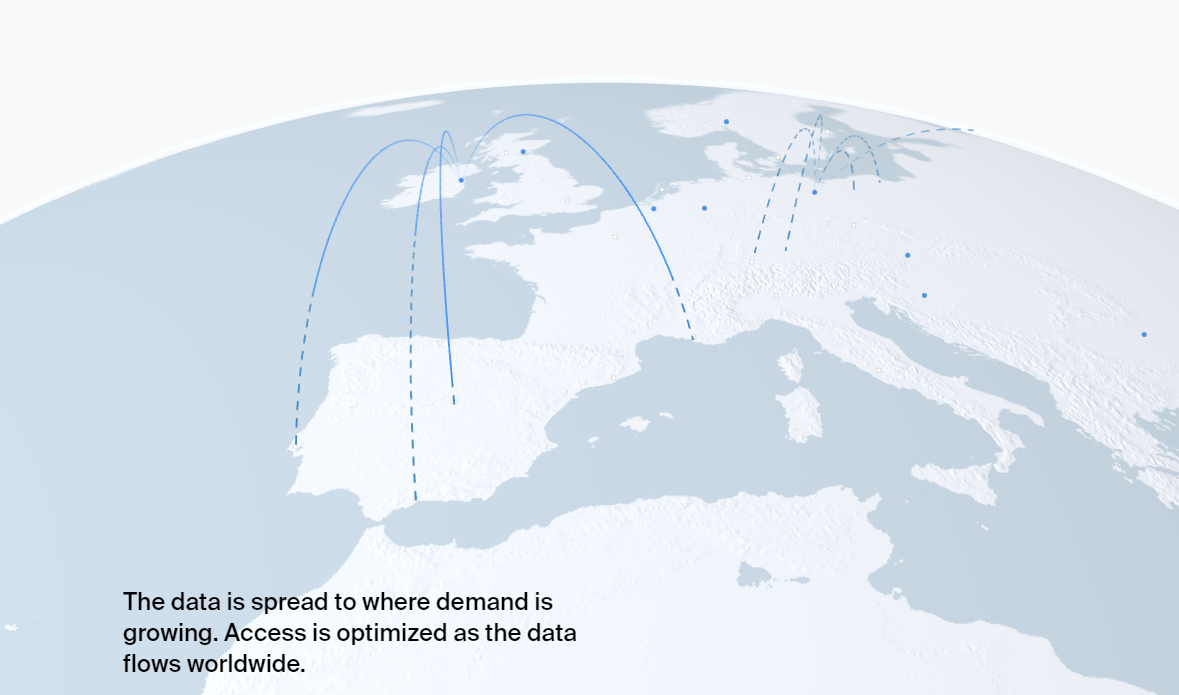
The Filecoin protocol is designed to optimize data flow based on demand. Image source: Filecoin
Arweave – A decentralized storage project partnered with Meta
Taking a similar approach to Filecoin, Arweave (AR) incentivizes users to perpetually store data pieces called “anchors” through a mining process that mints AR native tokens. However, it differentiates itself by employing a cold storage archive method where information is retained even if the network changes over time. Arweave has archived terabytes of permanent websites, apps, and other content. In 2022, Arweave penned a deal with Meta that involves storing Instagram’s digital collectibles, which is one of the reasons we’ve featured AR on our list of the most promising altcoins.
Storj
Storj (STORJ) allows people to earn rewards by contributing unused storage space on their devices, like hard drives to a decentralized cloud storage network. As more storage providers join, the network’s overall capacity increases.
Render Network – Decentralized GPU computing distribution platform
Leveraging idle GPU power from networked computers, Render Network creates a decentralized supercomputer accessible to all. It ensures users have affordable, high-performance computing for tasks such as machine learning, game development, and more. Individuals who rent out their rigs earn RNDR tokens, aligning motives toward optimizing collective hardware resources. Render already offers more power than top centralized cloud providers.
Helium – A global IoT network
Operating the world’s first decentralized wireless network, Helium rewards individuals who install LORA hotspots with HNT tokens. This grants them an ongoing passive income while expanding internet access globally. Over 1 million hotspots have been deployed in over 170 countries, vastly improving connectivity in remote regions. The network is also developing 5G capabilities for enhanced performance. Projects like Filecoin and Helium provide real-world examples of “what is DePIN crypto” through their decentralized storage and wireless networking platforms.
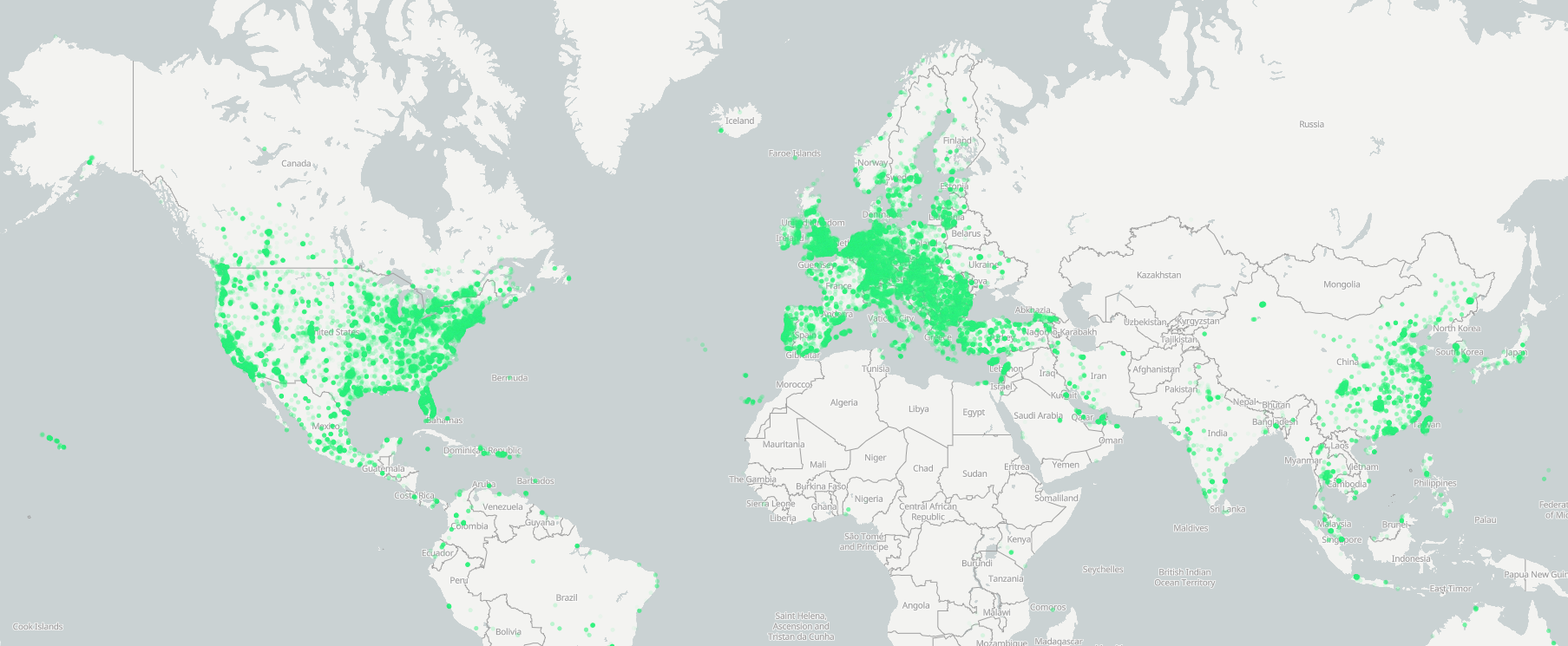
A map of active Helium hotspots. Image source: Helium Explorer
Theta Network – A video, AI & Entertainment network
As a leading DePIN, Theta empowers users to share redundant bandwidth and compute for video streaming. Viewers can also lend excess capabilities to enhance network functionality. In exchange, participants gain THETA tokens as a reward while lowering transmission latency and reducing strain on online services. Theta has partnered with Samsung and supports virtual reality streaming.
LBRY – A user-controlled content marketplace
LBRY uses its token to tokenize content operationally and rewards users for hosting, seeding, and interacting with decentralized video and audio streams. “LBRY does to publishing, what Bitcoin did to money,” is the team’s mission statement, one which encapsulates the ethos of the project pretty well.
These are just a few prominent examples, but DePIN models apply to nearly any infrastructure domain imaginable, thanks to crypto incentives. The technology enables new frameworks that disrupt established norms and thinking through collective intelligence.
Benefits of DePIN
What are the key perks that decentralized infrastructure networks provide over traditional centralized approaches? Here are a few notable advantages:
- Redundancy robustness and resilience thanks to the use of many substitutable nodes rather than centralized points of failure.
- Affordability by bringing resources together through open participation instead of closed systems operated by monopolistic entities seeking profits
- Efficiency gains are realized due to transparent protocols that optimize usage and prevent underutilization of assets.
- Accessibility for all to engage as consumers or providers of infrastructure services on an even playing field worldwide.
- Innovation is encouraged through open frameworks that empower new applications instead of closed architectures
- Sustainability since reward incentives continuously engage communities to keep improving and future-proof systems.
By capitalizing on these strengths derived from decentralization, DePIN holds immense promise to enhance networks in ways centralized configurations cannot match alone or possibly at all. The technology establishes novel paradigms of infrastructure that could benefit humanity substantially.
Building sustainable DePIN projects
While the disruptive promise of DePIN is exciting, new networks must thoughtfully consider long-term viability from the onset to avoid pitfalls that could undermine credibility. As Hivemapper CEO Ariel Seidman outlines, successfully establishing a sustainable DePIN depends greatly on well-designed tokenomics.
Key lessons that DePIN crypto projects should heed involve:
- Avoiding static rewards that break incentive alignments over time
- Implementing dynamic models tied to geographic demand, contribution quality, and overall network progress
- Incentivizing adding value rather than meaningless busywork
- Prioritizing regions and tasks where infrastructure is most needed
- Assessing contribution reputations to authenticate integrity
- Gradually reducing concentrated early Adapter benefits as more join
Being mindful of these aspects will foster healthy, productive communities committed to serving real customer demand rather than speculative behaviors harmful to a protocol’s integrity. With attention to sustainable economics built for enduring impact, DePIN’s potential for transformative infrastructure development can be fully realized.
Future applications and outlook of DePiN
Considering how far projects have progressed already, it’s exciting to imagine what new horizons may open up for decentralized infrastructure given more time and attention. Some possibilities include:
- Distributed ledgers are being used to allocate energy from renewable sources more efficiently on smart microgrids.
- AI and big data analytics enhance everything from traffic control to precision farming when computed on broader networks.
- Mesh networks formed from billions of decentralized edge devices autonomously upgrade entire cities’ connectivity.
- Self-sovereign digital identities provide tamper-proof authentication solutions leveraged throughout the real world.
- Mixed reality hardware cooperatively powering massively scalable augmented environments.
As long as participants are properly incentivized, few limits exist to the community-organized infrastructure networks DePIN symbology could spin up. The next decade may unveil entirely new kinds of systems that redefine industries through open collaboration at a never-before-seen scale.
The bottom line: Why community-owned networks are the future?
From data storage and wireless connectivity to computing resources and media distribution, DePINs represent blockchain-enabled infrastructure’s logical next stage of development. By distributing ownership and aligning incentives across user networks worldwide, these projects promise to supplement, not supplant, traditional infrastructure through cooperative crowdsourcing models.
DePIN implementations prove the technical and economic viability of decentralizing infrastructure at a global scale. Continued application across industries now waits to unlock trillions in new GDP by bringing individuals worldwide into networks as active stakeholders rather than passive consumers.
For builders and users alike, decentralized cooperation over centralized control represents the infrastructure’s future. DePINs lighting the proof-of-concept path, it’s an evolutionary journey well worth following as critical systems worldwide are reimagined from the ground up.


