

The Internal Revenue Service (IRS) is moving in the direction of providing a free software service to taxpayers, as evidenced by the Direct File pilot program in 13 states, starting in 2024. The project enables taxpayers to file their taxes directly with the IRS with the assistance of software similar to Turbo Tax.
For decentralized finance (DeFi), the IRS should use open, traceable and tamper-proof public blockchain data to provide taxpayers with similar free tax assistance concerning their gains/losses and cost-basis reporting information. This would eliminate the need for DeFi protocols to collect personal user data and file 1099 forms with the IRS under a recently proposed crypto-broker rule.
This op-ed is part of CoinDesk’s Tax Week, presented by TaxBit. Michael D. Bodman is the president, founder and managing director of the digital asset and technology investment firm Open Source Ventures, and lecturer in economics and finance at the Anderson College of Business and Computing of Regis University. This is an excerpt from a comment letter Bodman filed pursuant to the proposed IRS crypto broker rule.See also: How the Crypto Industry Responded to the IRS Proposed Broker Rule
The IRS proposal
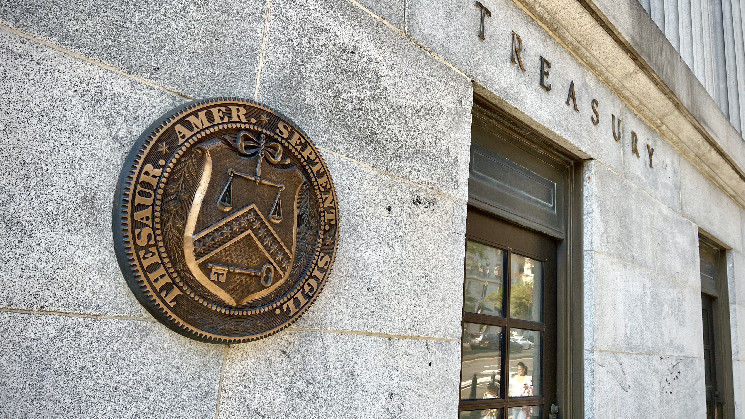
In August 2023, the U.S. Treasury Department and IRS released a proposed rule that defines the term broker in the context of digital assets. Brokers are demarcated to include not only centralized exchanges like Coinbase that directly effectuate transactions but also individual software developers, self-custodial digital wallets with swap connections and decentralized software protocols that facilitate (directly or indirectly) digital asset transfers or trades.
As of this writing, the proposal has generated over 120,000 public comments, indicating how controversial the rule is.
The proposed rule identifies various parties that facilitate (directly or indirectly) or effectuate (indirectly) digital asset transfers and trades. These parties include:
Offering access to a protocol,
Offering an automated market maker system,
Offering services to discover the best buy and sell prices,
Providing self-custodial wallets with swap functions that enable access to decentralized blockchain trading platforms, and
Offering Internet access services, potentially including web browsers and Internet service providers.
None of these parties directly effectuates transactions of digital assets within the scope of the authority granted by Congress, as crypto exchange Coinbase stated in its comment letter on the proposed rule.
Unfit for purpose
The Treasury Department and the IRS seek to retrofit paper-based IRS-1099 reporting requirements designed for another era onto persons and groups of persons who are not organized and do not function like intermediaries and thus brokers.
If a staggering number of parties who do not fit the definition of broker — 98% of which are small businesses according to the Treasury and IRS — must collect personal information, safeguard that information and transmit it to the IRS, the rule creates a giant honeypot of personally identifiable information (“PII”) for malicious hackers.
The IRS does not have a good track record of keeping taxpayer information secure. In 2016, the IRS admitted that more than 700,000 social security numbers and other sensitive personal data were stolen from the agency’s systems.
A lawsuit by trader Ken Griffith, whose tax data was leaked by the IRS, notes that the IRS has received a decade of annual warnings by the Treasury inspector general for tax administration that the agency’s “number one major management and performance challenge area” is data security, according to the Wall Street Journal.
There is no better measure of the sheer profligacy in IRS use of taxpayer money than the anticipated volume of IRS-1099 forms to be processed.
“Our estimate right now is that we will ingest — don’t fall off your chairs — eight billion information returns, and that’s just the in-development Form 1099-DA,” said Julie Foerster, IRS director of digital assets, during a meeting of the Council for Electronic Revenue Communication Advancement on Oct. 25, according to Tax Notes.
Foerster added that eight billion is greater than all other IRS-1099 forms currently processed combined. Eight billion is also the total number of men, women and children on Earth.
Blockchain is not the problem, it is the solution
Taxpayers already have many crypto-tax vendors to choose from when compiling information for their tax returns, such as Token Tax, Koinly and Zen Ledger. Due to the transparency and traceability of public blockchain transactions, users simply input their pseudonymous digital wallet addresses and receive a complete, itemized and forgery-proof record of their taxable trades from decentralized financial protocols along with cost-basis information.
The blockchain is the data of record without any need for reporting from a middleman. This approach is impossible in traditional finance due to the complete reliance on opaque private intermediaries (i.e., brokers), hence the need for IRS-1099 reporting from these private middlemen.
No sound reason
There is no sound reason for the Treasury and IRS to label an imaginary middleman and force that imaginary middleman to report DeFi trades and cost-basis tax information. There is no middleman in DeFi protocols, hence the innovation of this new technology.
See also: Why Regulators Must Understand, Not Police, DeFi | Opinion
DeFi users effectuate their own transactions using self-custodial digitals wallets. The IRS already has access to the underlying data from trades involving DeFi protocols through public blockchains of record. My proposed solution is not only possible but available today, as evidenced by vendors providing this service.
It would be exponentially more cost-efficient to society than processing eight billion unnecessary and duplicate IRS-1099 forms.
Unlike the proposed IRS rule, my approach would:
not eliminate DeFi protocols or self-custodial digital wallets that do not directly effectuate transactions (users effectuate their own transactions),
not exceed the authority granted by Congress under the law, and
still achieve the goals of better tax information reporting, compliance and increased tax revenue while mitigating privacy concerns.
True middlemen (e.g., Coinbase) would still be designated as brokers and be required to file tax information reports with the IRS. All U.S. crypto users must utilize a centralized exchange like Coinbase to on-board and off-board between the U.S. dollar and digital assets. These on/off ramps like Coinbase should be the focus of blockchain-based financial regulation, not autonomous software protocols without a genuine middleman.
CoinDesk does not share the editorial content or opinions contained within the package before publication and the sponsor does not sign off on or inherently endorse any individual opinions.


