

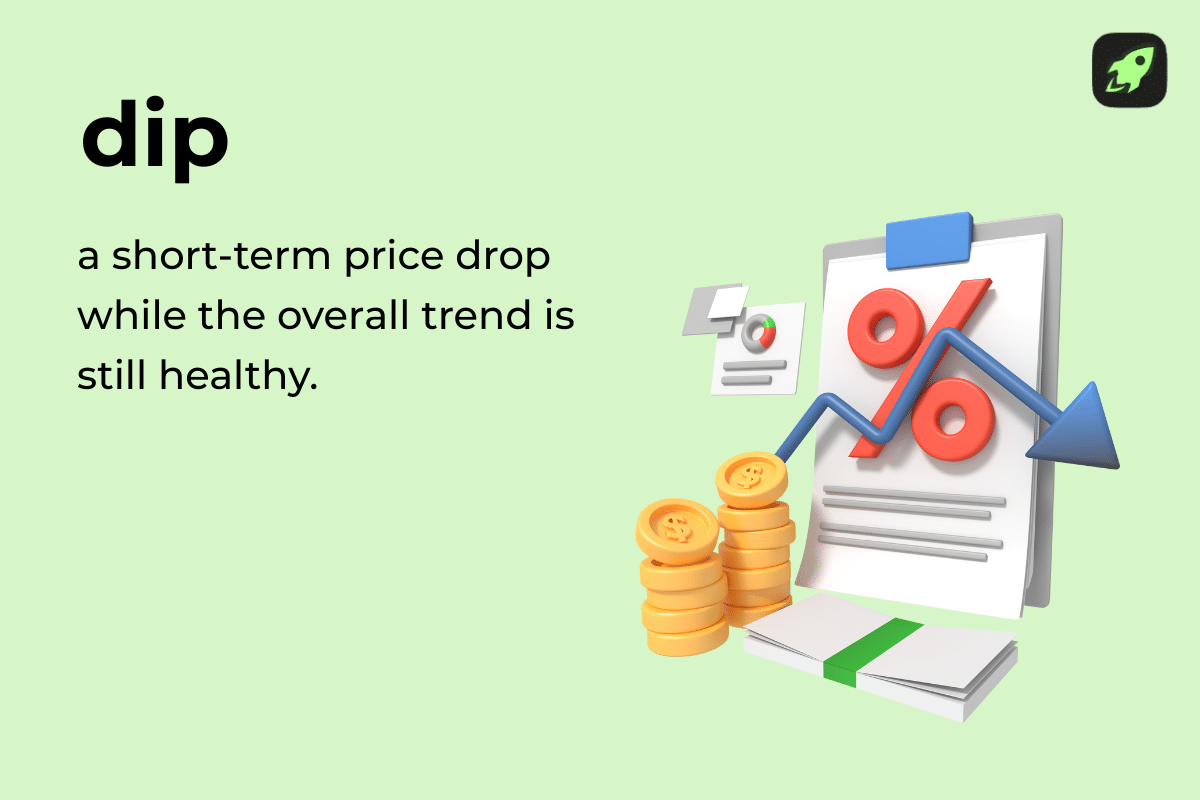
“Buy the dip” is the battle cry of all crypto traders. But, for a beginner, that means about as much as any other crypto slang. In crypto circles, the dip means a change in price where the coin becomes cheaper than before. Coins don’t always bounce back, though, so you should be careful. In this guide, we’re going to explain why dips happen, how and when to buy the dip, and what to watch out for.
What “Buying the Dip” Really Means
Buying the dip means purchasing crypto after its price declines, when the market pulls back and coins become temporarily cheaper. A dip refers to a short-term drop, not a crash, and successful dip-buying requires timing, risk management, and understanding of market conditions. For example, in May 2021, Bitcoin’s price dropped by 40% after reaching an all-time high in April. The dip was caused by a combination of negative news, but the price rebounded later on.
Many traders use statistical tools (moving averages or the Relative Strength Index) to avoid “catching a falling knife”—buying a stock after a sharp price drop. Others follow dollar-cost averaging—buying at regular intervals. Since the cryptocurrency market is extremely volatile, not all dips are created equal. Staying informed, managing your risk tolerance, and avoiding panic selling help make smarter decisions when dip buying opportunities appear.
Read more: Best Indicators for Crypto Trading
Why Dips Happen: Volatility, News, and Market Cycles
Dips in the cryptocurrency market usually happen because of three things:
- Extreme volatility
- Breaking market news
- Natural market cycles
Crypto prices react fast to headlines—hacks, regulations, or big sell orders can trigger sudden price declines. Sometimes dips are just short-term market fluctuations caused by traders taking profit after a rally. Other times, broader cycles like bear markets push prices lower before the market rebounds. These moves can create a buying opportunity, but they also involve risk. That’s why investors should stay informed, use technical indicators for trend confirmation, and avoid impulsive decisions when learning how to buy the crypto dip.
Learn more about Bull and Bear Markets

How to Get Free Crypto
Simple tricks to build a profitable portfolio at zero cost

Get Your House in Order Before the Next Dip
If you want to buy the dip effectively, prepare before the next drop hits. The crypto market moves fast, and market dips reward the people who plan, not those who panic. Start by setting clear investment goals, learning basic technical analysis, and deciding how much you can invest as a fixed amount you aren’t afraid to lose. Keep your accounts funded, your exchanges ready, and your wallets secure so you’re not scrambling when cryptocurrency prices fall. Stay updated on market news, avoid common mistakes like chasing hype, and remember: smart crypto investors make informed decisions long before the price reaches a temporary decline.
Is This a Dip or a Disaster? Reading Market Context
Not every dip is an opportunity, so to avoid losing money, you should learn to spot the difference. A real dip usually happens during healthy market trends—when sentiment is still positive, fundamentals look stable, and the drop is caused by short-term fear, profit-taking, or normal market fluctuations.
A disaster, on the other hand, shows signs of deeper trouble: repeated breakdowns of support levels, bad market news, collapsing market sentiment, or major regulatory hits. Prices keep falling with no meaningful bounce, and volume dries up instead of increasing.
Simple Tools to Spot Reasonable Dip Zones
When you’re trying to buy the dip, a few simple tools can help you find areas where cryptocurrency prices might bounce.
Support and Resistance Levels: Where Buyers and Sellers Tend to Show Up
Support is where buyers usually step in at lower prices, and resistance is where sellers take profit. These zones help you guess where a potential recovery could start.
Trendlines and Channels: Drawing the “Path” of the Price
By sketching trendlines, you can see the general direction of the crypto asset and get a sense of how price reacts during market fluctuations.
Read more: Top Chart Patterns for Crypto Trading
Moving Averages (SMA & EMA): Dynamic Support in an Uptrend
Moving averages are the tools that show the average price of a coin over a chosen period (the last 20, 50, or 200 days). The Simple Moving Average (SMA) takes all the closing prices over a set number of days, adds them up, and divides by that number. It gives an even, steady line that helps show long-term trends. The Exponential Moving Average (EMA) gives more weight to recent data. This makes it react faster to current market movements, which is useful for spotting short-term trend changes. Basically, the SMA is a slow and steady trend view, while the EMA is good for a quicker reaction to price changes
In bull markets, moving averages often act like “soft floors,” helping you judge whether a dip is just a normal pullback.
RSI and “Oversold” Conditions: When Selling Pressure Looks Exhausted
The Relative Strength Index (RSI) is an indicator that shows the speed and change of price movements. A low RSI can signal that sellers may be tired, hinting at a buying opportunity—though it’s not a guarantee.
Why No Single Indicator Is Enough: Combining Signals Without Overthinking It
Smart investment decisions come from mixing a few signals rather than relying on one magic tool. Keep it simple, exercise caution, and use these basics to shape a solid strategy when buying cryptocurrencies.
Core Strategies for Buying the Dip
There’s no single right way to buy the dip, but a few beginner-friendly strategies can help you avoid emotional decisions.
Here is our guide on How to Read Candlesticks on a Crypto Chart
Strategy 1: Dollar-Cost Averaging (DCA): Smoothing into the Market

You invest a fixed amount at regular intervals, no matter the price. This removes stress and helps you slowly build a position during market dips and recoveries.
Read more: What is Dollar-Cost Averaging (DCA) and How Does it Work?
Strategy 2: Buy-the-Dip with Predefined Limit Orders
You set buy orders at lower prices ahead of time. When the market dips, your orders trigger automatically, so no chasing candles or guessing mid-drop.
Strategy 3: Hybrid Approach (DCA + Extra Buys on Deep Dips)
You DCA normally, but when a bigger dip hits, you add a little extra. It’s flexible, beginner-friendly, and avoids going all-in too early.
Strategy 4: Lump-Sum Investing on “Capitulation” Dips (Advanced, High Risk)
This approach means placing a large buy when the market hits extreme fear or capitulation. It can offer huge upside—but timing is hard, and beginners should be careful.
Managing Risk While You Wait for the Rebound
Buying the dip is only half the job. The real challenge is managing your risk while the market moves back and forth.
Stop-Loss Orders: Where to Place Them So They Actually Help
A stop-loss protects you if the dip turns into a deeper downtrend. Place it below major support levels, not too close, so normal market noise doesn’t knock you out early.
Take-Profit Orders and Partial Exits: Locking Gains Step by Step
Instead of trying to guess the perfect top, take profits in small chunks as the price rises. This helps you secure gains while still leaving room for further upside.
Diversification: Spreading Dip Buys Across Several Coins Instead of One Bet
Don’t put everything into one crypto asset. Spreading your dip buys across multiple solid coins reduces the impact if one performs poorly.
Using Stablecoins as “Parking Space” Between Dips
Keeping part of your funds in stablecoins lets you react quickly when new opportunities appear. It’s a safe waiting zone while you plan your next move.
When Buying the Crypto Dip Is Not a Good Idea
Buying the dip can be smart, but not every price drop is worth jumping into. Here are some common mistakes you can make if you come in unprepared:
- Buying without context (just because price dropped). A dip isn’t automatically a bargain. Sometimes the whole market is weak, or a coin is falling for a real reason. Always check what’s happening before jumping in.
- Using heavy leverage or all-in on first dip. Crypto can dip multiple times. Going all-in or using big leverage too early can wipe you out before the rebound even starts.
- Ignoring asset fundamentals. If the project is dying, abandoned, or has major red flags, buying the dip won’t save it. Weak fundamentals make dips dangerous, not appealing.
- Timing the exact bottom instead of planning for a rebound. Almost no one catches the perfect bottom. It’s better to plan for recovery zones and build your position slowly instead of waiting for the magical lowest price.
Final Thoughts
It sounds like buying the dip is simple. You’ve seen people buy Bitcoin when the price goes down. But even then, it’s a risky move. While more established coins are likely to recover, even if not right away, the rest have to be carefully vetted, and their history considered. As always in crypto, the main rule remains: Research, research, research—and never make rash decisions. And with these strategies, you can do just that.
FAQ
Is buying the dip a guaranteed way to profit?
No. Buying the dip can work, but nothing is guaranteed in crypto. Prices can keep falling, or the asset may never recover. It’s a strategy—not a promise.
Should I buy every dip or only big ones?
Don’t buy every small dip. Focus on bigger, meaningful corrections that match your long-term plan. Let your strategy—not emotions—decide when to buy.
What if I buy and the price drops another 20%?
This happens often. You can either wait for recovery, buy more using DCA, or stop adding. The key is to avoid panic and stick to your plan and risk tolerance.
Can I automate my DCA or dip strategy with recurring buys or bots?
Yes. Most exchanges and apps offer recurring buys or automated trading tools. These help remove emotion and keep your strategy consistent.
How much of my portfolio should I keep in stablecoins ready for dips?
There’s no universal number, but many traders keep 10–30% in stablecoins for dip opportunities. Choose an amount that fits your risk level and goals.
Are crypto dips different from stock market dips?
Yes. Crypto dips are usually faster, deeper, and more volatile. Stocks tend to move slower because they’re tied to company earnings and regulations, while crypto reacts quickly to news and market sentiment.
Disclaimer: Please note that the contents of this article are not financial or investing advice. The information provided in this article is the author’s opinion only and should not be considered as offering trading or investing recommendations. We do not make any warranties about the completeness, reliability and accuracy of this information. The cryptocurrency market suffers from high volatility and occasional arbitrary movements. Any investor, trader, or regular crypto users should research multiple viewpoints and be familiar with all local regulations before committing to an investment.


